
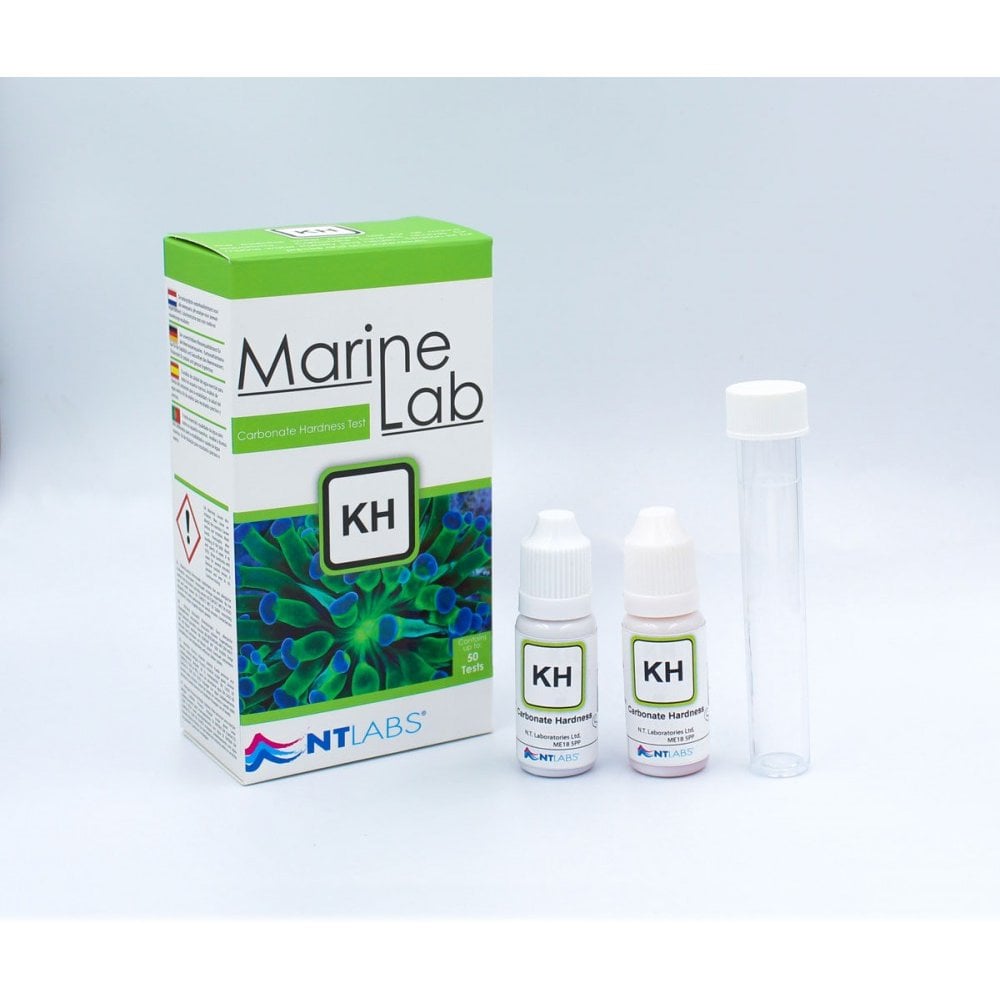

NT LABS Marine Lab Carbonate Hardness Test
- £9.99
Next Day Shipping cut off is at Noon/12:00pm
Orders after that time will be processed the next working day
Please Note: Certain ponds, aquariums, all pond plants, and all livestock are excluded from free delivery.
The blue highlighted area on the map below is where we deliver on our own vehicle. Unfortunately, if you are not in one of these postcode zones we are unable to deliver certain items such as plants, small glass items and selective other products.

We offer a few different delivery options depending on the size and value of your order.
Certain orders over £50 qualify for free mainland UK (excludes Northern Ireland, Pond Plants, and livestock) delivery which will arrive within 3-5 working days of the order being processed.
Orders Below £50 in Mainland UK will be charged a standard delivery fee of £5.99.
Pond Plant and Tropical/Marine/Pond Livestock will be charged a delivery fee of £19.99.
Additional Shipping Charges
For any orders that do not include Aquariums, the below is charged:
Next Working Day Parcel Delivery to Mainland UK - £7.99 OR £2.99 if the order is over £50 (excludes Northern Ireland)
Standard Parcel Delivery to Northern Ireland £8.99
Standard Parcel Delivery to Scottish Highlands & Islands £9.99
Standard Parcel Delivery to Jersey & Guernsey £12.99
For all Aquarium, Medium - Extra Large Terrarium/Vivarium/Paludarium deliveries (Excluding biOrbs & Smaller Aquariums), the below is charged:
You must be present for delivery and please check your item before signing for delivery.
A payment link will be sent to you if redelivery is required.
Next Working Day Pallet Delivery - £20
2 Hour Booking Slot Pallet Delivery - £20
Pallet Delivery to Northern Ireland - £45
Saturday and OptiClear 90 & 120 Delivery - £60
Pallet Delivery to Isle of Wight (PO30 and Above) and Scottish Highlands (AB, PH, IV1-36, IV, KW1-14, KY, PA21-41) - £45
Pallet Delivery to the Scottish Isles (KA27-28, PA60-90, ZE, JE, GY, IM, IV40-56, KW15-17, PH42-44, PA20, PA42-49) - £120
Pallet Delivery to Outer Hebrides (HS) - £140
Pond's over 1000 litres will be a curb side pallet delivery.
Aquariums over 125 litre will be a curb side pallet delivery.
The couriers we use are Royal Mail, DX, APC, and UPN.
Standard Delivery
|
£5.99 delivery under £50 Free delivery over £50 (some products excluded) 3-5 Working Days Delivered Monday-Friday End-to-end tracking |
|
Northern Ireland Standard Delivery
|
£15.99 delivery 3-4 Working Days Delivered Monday-Friday Mainland UK End-to-end tracking Third Party couriers in Northern Ireland |
|
Next Day Delivery
Cut off is Noon/12:00pm
|
£7.99 deliveries under £50 £2.99 deliveries over £50 Delivered Monday-Friday End-to-end tracking Orders received after cut off will be processed on the next working day |
|
Saturday Delivery
Cut off is Noon/12:00pm
|
£9.99 for all deliveries Delivered Saturday Only End-to-end tracking |
|
Livestock Delivery
Cut off is Noon/12:00pm
|
All order sizes £19.99 Delivered Wednesday-Friday End-to-end tracking Orders received after cut off will be processed on the next working day |
|
Plant Delivery
Cut off is Noon/12:00pm
|
All order sizes £19.99 Delivered Wednesday-Friday End-to-end tracking Orders received after cut off will be processed on the next working day |
|
Standard Curb Side Pallet Delivery
Cut off is Noon/12:00pm
|
3 Working Days Delivered Monday-Friday End-to-end tracking |
|
Next Day Curb Side Pallet Delivery
Cut off is Noon/12:00pm
|
3 Working Days £20.00 for all deliveries Delivered Monday-Friday End-to-end tracking Orders received after cut off will be processed on the next working day |
|
Saturday Curb Side Pallet Delivery
Cut off is Noon/12:00pm
|
£60.00 for all deliveries Orders received after cut off will be processed for the following Saturday Delivered Saturday Only End-to-end tracking |
|
Northern Ireland Curb Side Pallet Delivery
|
£45 delivery 2-3 Working Days Delivered Monday-Friday End-to-end tracking |
|

