
This site uses cookies to provide and improve your shopping experience.
If you want to benefit from this improved service, please opt-in.
Cookies Page.
Red Sea REEF-SPECâ„¢ Carbon is the ultimate choice for marine & reef aquariums due to its unique technical characteristics.
Product Description
Red Sea REEF-SPEC™ Carbon's granule size and its micro/macro porous structure, ensures a very high total adsorption capacity and rapid extraction of the specific organic pollutants that are found in Reef aquariums.REEF-SPEC™ Carbon has extremely low phosphate leaching and minimal ash content while also not affecting the pH of aquarium water.Red Sea REEF-SPEC™ Carbon needs replacing less frequently than carbons that are not reef-specific or are of a lower quality and represents an effective, cost-efficient solution for providing the very best water quality in marine & reef aquariums. Main features:Rapid removal of organic pollutantsHigh total adsorption capacityUltra-Low phosphate outputUltra-Low ash contentSuitable for Marine & FreshwaterFilter Bag includedSpecificationShape - 0.6-2.3 mm flakesDensity - 0.48 g/mlPore Volume (PV) - 1.04 ml/gTotal Surface Area (TSA) - 1000m2/gTSA/PV - 990m2/mlSmall organic molecules adsorption - 1000mg/gLarge organic molecules adsorption - 280mg/gpH in distilled water - 8Phosphate output - 0.000001g/mlWhy do we need to use carbon in a reef aquarium?There are organic pollutants that can only be removed from reef aquarium water by active carbon.The reef aquarium is a closed artificial ecosystem where living creatures continually produce organic waste consisting of proteins, fats, carbohydrates, organic acids and phenols.If allowed to decompose the organics will fuel the activity of many unwanted microorganisms in the aquarium, increasing the total oxygen demand (BOD, COD) which will cause a reduction in Redox potential, as well as causing excessive production of CO2 by bacterial respiration, which will reduce pH. Furthermore, there will be an increase in nitrogenous and phosphorus compounds, encouraging growth of nuisance bacteria and eventually of nuisance algae. The accumulating organics also has a significant effect on light penetration, especially in the blue and near UV spectrum that stimulates coral growth.Stripping out the organics from the water is therefore crucial for the success of the aquarium. Using strong protein skimming, fine mechanical filtration and healthy biological filtration (nitrification and de-nitrification) will treat the large organic particles and the end products of the organic decomposition processes. However, there are many small organic particles that can only be treated by very fine mechanical micro-filtration using activated carbon.How does activated carbon filter water?Scientifically speaking, carbon removes the organics from water by a physical process called adsorption. Within a reef aquarium, the submicroscopic pores of activated carbon is the final stage of the mechanical filtration process, adsorbing the organic molecules that are too small to be removed by even the finest mechanical filters or physically removed from the water by protein skimming. Adsorption can be thought of as the adhesion of a molecule to surface by attractive forces. This occurs within the submicroscopic pores of the carbon because the attractive forces between the organic molecules and the internal surfaces of the carbon are far greater than the attractive forces that keep them dissolved in solution. This will continue until all of the surface area inside the carbon is used up and it becomes saturated with organics. What is activated carbon?Activated carbon is an extremely porous material with a sponge like structure but with a very large internal surface area relative to its physical size. It is produced from many organic materials that have a high carbon content such as coconuts shells, nutshells, lignite, bituminous coal or anthracite. The carbon-based material is "activated" through physical modification and thermal decomposition in a furnace, under a controlled atmosphere and temperature. The activation process significantly increases the surface area per unit volume of a fine network of submicroscopic pores which is what gives activated carbon its ability to act as a filter material. The specific source of the carbon and the specific activation process determines the physical characteristics of the finished product. There are many different grades of activated carbon and therefore they must be selected specifically for each and every application.What makes a specific carbon ideal for reef aquariums usage?There are a number of internationally accepted tests for evaluating and comparing activated carbon. However, the most significant parameters for selecting a carbon for reef aquariums are the Iodine Number and Methylene Blue Number. These two parameters measure the ability of the carbon to adsorb all of the organic waste from a reef aquarium that is not removed by the mechanical filtration and protein skimming. The higher the number the more organics will be removed from the aquarium per gram of active carbon used. Both of these numbers are about as important as each other and should always be considered together when evaluating test data.Some manufacturers quote a Molasses Number, however the molecules in the molasses size range are typically removed by protein skimming and therefore this number is irrelevant when evaluating the suitability of activate carbon for reef aquariums.In the past, carbons have been known to leach phosphate into the water, which is undesirable for a reef aquarium and therefore the lowest levels of Leachable Phosphate are considered better. In reality, as long as the leachable phosphate is below a basic threshold level, any differences below that level is not measurable in reef aquariums and is therefore irrelevant.The cleanliness or dustiness of the product is also a consideration and is measured as the Ash Level. The lower the better as higher levels indicate a larger quantity of particles will be released to the water and a lower actual mass of carbon left to do the filtration. Ash levels are often quoted by manufacturers however it is easiest visualized by viewing the turbidity on adding the carbon to water.In addition to these important indicators, the overall efficiency of the activated carbon will be effected by its physical parameters such as Product Density, TSA, Pore Volume and Mesh Size.Activated carbon produced from lignite and anthracite are not recommended for reef aquariums due to an excessive amount of fine powder released to the water (which may lead to lateral line necrosis "HLLE disease" in some fish). Coconut shell or bituminous coal are the preferred sources.Tips on using Reef Spec Carbon in a reef aquarium The adsorption activity of the carbon media relies on a good carbon/water contact and therefore moderately active water flow will increase the efficiency. Strong water flow will reduce the contact time and interfere with the adhesion process of the organic molecules to the carbon. Strong water flow may also cause the granules to grind against each other, releasing carbon material to water. For best results:Remove any fines, by rinsing carbon under tap water.Due to air trapped in the pores carbon will float and therefore it is recommended to soak the carbon in RO water until all of the air has been released.Place the carbon in a location with an active flow of 1000-1500 lph (250-400 gph) per 50 gr carbon.Replace carbon every 1.5 – 2 months. Note: When carbon becomes saturated with organics, it may start adsorbing some of the trace elements from the seawater.Usage GuideOrganic load and yellow tint removal: The recommended dosage of Red Sea's REEF SPEC Carbon is approximately 50 gr (100 ml) per 200 L (50 gallons) for a period of 1-2 months for a moderately stocked reef aquarium.Post-medication treatment: The recommended dosage of Red Sea's REEF SPEC Carbon to adsorb medication residuals is approximately 100 gr (200 ml) per 200 L (50 gallons) for a period of a week.Ozone post-treatment: The recommended dosage of Red Sea's REEF SPEC Carbon to remove residual ozone is 50 gr per 50mg/hr of ozone injection. The carbon should be placed at the ozone reactor/ protein skimmer outlet. Carbon should be replaced once it has reached approximately 50% of its original volume.
Reef Energy Plus AB+ is an all-in-one superfood that will have your corals thanking you, delivering better growth, higher resilience, brighter colors, greater ease of use with automatic dosers, and minimal over skimming.
Product Description
Based on our long-term research, Reef Energy Plus is an enhanced supplement that provides the complete nutritional components needed by Soft, LPS, SPS, and non-photosynthetic corals for vitality, growth, and coloration.Maximal growthWith Reef Energy Plus, your corals will grow even faster than the original, two-part formula. Our long-term laboratory testing clearly demonstrated a 15% faster growth rate with Reef Energy Plus.Ease of use with automatic dosingFeeding your corals is easier than ever. You can use an automatic doser to feed your corals with Reef Energy Plus, as the new all-in-one formulation can be kept unrefrigerated and unstirred for up to one week without compromising the efficacy of the combined components.* To avoid spoilage, do not leave Reef Energy Plus unrefrigerated for more than one week and wash the dosing container with soapy water between refills.Minimal over skimmingThe new formulation minimizes over skimming after feeding.Highest energetic efficiencyConsists of an organic complex of dissolved and suspended simple building blocks of carbohydrates, amino acids, fatty acids, and vitamins, Reef Energy Plus can be absorbed and consumed directly by the corals. This immediate, direct consumption provides the highest energetic efficiency to the corals.No residual wasteEvery single component of Reef Energy Plus is consumed and utilized by the corals for their metabolic processes (e.g., protein production and soft tissue regeneration), leaving no unnecessary polluting organic material in the aquarium. * When using LED lighting, increase the dose if corals are not growing even if there are no signs of photoinhibition.Package size/volume:250 ml (8.45 fl. Oz.)
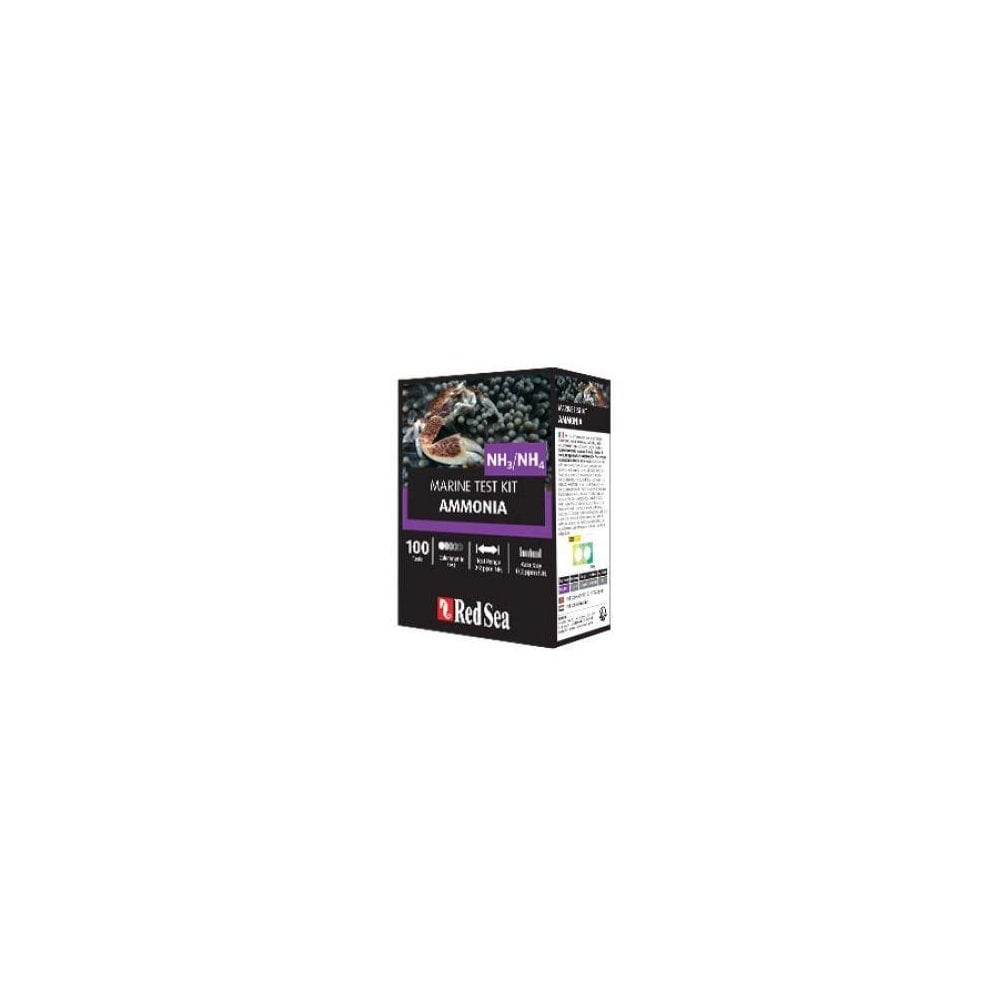
Red Sea Ammonia Marine Test Marine Kit is an advanced colorimetric test measuring the total ammonia (NH3/NH4) in marine aquariums to an accuracy of 0.2 ppm.
Red Sea Ammonia Marine Test Kit simple to use test kit is essential during the initial stage of the biological maturation of all marine and reef aquariums.Red Sea Ammonia MarineTest Kit Includes 100 tests.
Can it be mounted on suction cups and are there cut outs on the filter case to install these by?
No, the M Bioflow does not have any suction cups to hold the filter to the aquarium. There are no holes on the filter designed to hold such suction clips.
Payment Methods
We accept all major Credit and Debit cards, and these are processed via a third party payment gateway called Opayo.
We also accept payments via PayPal, PayPal credit, Clearpay and Klarna which are both pay in 4 interest-free instalments.
Also, you can pay using Android and Apple Pay if you are using a compatible device.
Your payment information is processed securely. We do not store credit card details nor have access to your credit card information.
Security
When speaking to one of our team, we will never ask you for your bank details, passwords or any private information. We will only ever ask for your order number followed by either your postcode, email address or phone number to verify we are talking to the person named on the account.
When creating an account on our website, we ask that you use a unique password, this will help keep all your online accounts safe. If you are visiting our website via a smartphone we suggest you use the strong password and store it securely on your phone.
Our website is run on Visual Soft, which means all your data is stored securely on their servers.
Next Day Shipping cut off is at Noon/12:00pm
Orders after that time will be processed the next working day
Please Note: Certain ponds, aquariums, all pond plants, and all livestock are excluded from free delivery.
The blue highlighted area on the map below is where we deliver on our own vehicle. Unfortunately, if you are not in one of these postcode zones we are unable to deliver certain items such as plants, small glass items and selective other products.
We offer a few different delivery options depending on the size and value of your order.
Certain orders over £50 qualify for free mainland UK (excludes Northern Ireland, Pond Plants, and livestock) delivery which will arrive within 3-5 working days of the order being processed.
Orders Below £50 in Mainland UK will be charged a standard delivery fee of £5.99.
Pond Plant and Tropical/Marine/Pond Livestock will be charged a delivery fee of £19.99.
Additional Shipping Charges
For any orders that do not include Aquariums, the below is charged:
Next Working Day Parcel Delivery to Mainland UK - £7.99 OR £2.99 if the order is over £50 (excludes Northern Ireland)
Standard Parcel Delivery to Northern Ireland £8.99
Standard Parcel Delivery to Scottish Highlands & Islands £9.99
Standard Parcel Delivery to Jersey & Guernsey £12.99
For all Aquarium, Medium - Extra Large Terrarium/Vivarium/Paludarium deliveries (Excluding biOrbs & Smaller Aquariums), the below is charged:
You must be present for delivery and please check your item before signing for delivery.
A payment link will be sent to you if redelivery is required.
Next Working Day Pallet Delivery - £20
2 Hour Booking Slot Pallet Delivery - £20
Pallet Delivery to Northern Ireland - £45
Saturday and OptiClear 90 & 120 Delivery - £60
Pallet Delivery to Isle of Wight (PO30 and Above) and Scottish Highlands (AB, PH, IV1-36, IV, KW1-14, KY, PA21-41) - £45
Pallet Delivery to the Scottish Isles (KA27-28, PA60-90, ZE, JE, GY, IM, IV40-56, KW15-17, PH42-44, PA20, PA42-49) - £120
Pallet Delivery to Outer Hebrides (HS) - £140
Pond's over 1000 litres will be a curb side pallet delivery.
Aquariums over 125 litre will be a curb side pallet delivery.